
Back pain affects millions of people every year, and for many, conservative treatments such as physical therapy, medications, injections, and lifestyle changes provide significant relief. But what happens when these treatments stop working? Many patients begin asking the same question:
“Is spine surgery really worth it?”
The answer isn’t the same for everyone. However, according to the latest research and advances in spinal care, modern spine surgery is safer, more precise, and more effective than ever before—especially for carefully selected patients. Improvements in minimally invasive techniques, robotic-assisted procedures, advanced imaging, and enhanced recovery protocols have dramatically improved patient outcomes while reducing recovery time.
If you’re living with chronic back pain, leg pain, numbness, or weakness that limits your quality of life, understanding today’s evidence can help you make an informed decision.
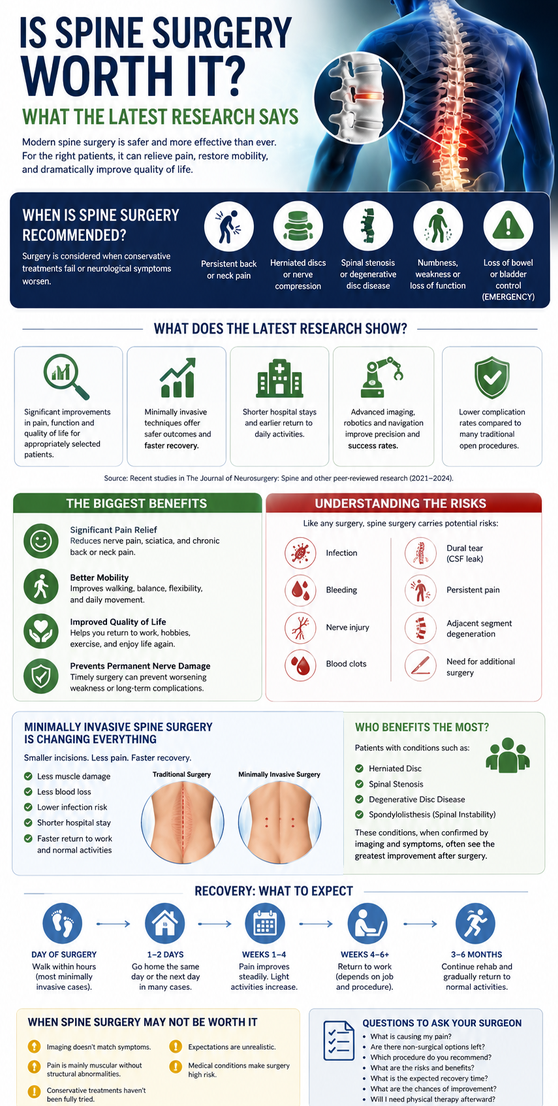
When Is Spine Surgery Actually Recommended?
One of the biggest misconceptions is that surgery is the first option for back pain.
In reality, experienced spine specialists recommend surgery only after conservative treatments have failed or when neurological symptoms continue to worsen.
You may be a candidate for spine surgery if you have:
- Persistent back or neck pain lasting several months
- Herniated discs causing severe nerve compression
- Spinal stenosis
- Degenerative disc disease
- Spondylolisthesis
- Spinal instability
- Progressive numbness or muscle weakness
- Loss of bowel or bladder control (medical emergency)
- Difficulty walking because of nerve compression
Most spine surgeons recommend exhausting non-surgical treatments before considering an operation unless the condition requires urgent intervention.
What Does the Latest Research Show?
Recent studies continue to show that patients who are appropriately selected for surgery often experience substantial improvements in pain, mobility, and overall quality of life. Modern minimally invasive approaches reduce tissue damage, blood loss, infection risk, and hospital stays compared with many traditional open procedures.
Research also highlights several major trends:
- Smaller incisions with less muscle disruption
- Greater surgical precision using advanced navigation and robotics
- Earlier mobilization after surgery
- Shorter hospital stays, with many procedures performed on an outpatient basis
- Faster return to work and daily activities for many patients
These advances have changed how surgeons approach spinal disorders and have expanded treatment options for patients who previously may not have been good surgical candidates.
The Biggest Benefits of Spine Surgery
- Significant Pain Relief
The primary goal of spine surgery is to relieve pain caused by compressed nerves or unstable spinal structures.
Many patients report dramatic improvement in:
- Sciatica
- Leg pain
- Neck pain
- Arm pain
- Chronic lower back pain
Pain relief often allows patients to resume activities they had previously stopped enjoying.
- Better Mobility
When spinal nerves are compressed, simple tasks like walking, standing, or climbing stairs can become difficult.
Successful surgery may improve:
- Walking distance
- Balance
- Flexibility
- Daily movement
- Physical independence
- Improved Quality of Life
Pain affects every aspect of life:
- Sleep
- Work
- Exercise
- Family activities
- Mental health
Many patients report improvements in overall quality of life after surgery because they can return to hobbies, work, and social activities.
- Preventing Permanent Nerve Damage
In some conditions, delaying surgery can allow nerve damage to become permanent.
Examples include:
- Progressive muscle weakness
- Severe spinal cord compression
- Cauda equina syndrome
- Advanced spinal stenosis
Early surgical treatment may prevent irreversible neurological injury.
Is Spine Surgery Always Successful?
No surgery can guarantee perfect results.
However, success depends on factors including:
- Correct diagnosis
- Appropriate patient selection
- Surgical technique
- Overall health
- Following postoperative rehabilitation
Patients with clearly defined structural problems that match their symptoms generally achieve better outcomes than those with generalized back pain without a specific surgical cause.
Understanding the Risks
Like any operation, spine surgery carries risks.
Potential complications include:
- Infection
- Bleeding
- Blood clots
- Nerve injury
- Cerebrospinal fluid leak
- Persistent pain
- Adjacent segment degeneration
- Need for additional surgery
Fortunately, advances in minimally invasive techniques, improved imaging, navigation systems, and enhanced recovery pathways have helped reduce complication rates for many procedures.
Minimally Invasive Spine Surgery Is Changing Everything
One of the biggest developments in recent years has been the growth of Minimally Invasive Spine Surgery (MISS).
Unlike traditional open surgery, minimally invasive procedures use specialized instruments and smaller incisions to reach the spine while minimizing damage to surrounding muscles and tissues.
Benefits often include:
- Smaller incisions
- Less blood loss
- Reduced postoperative pain
- Lower infection risk
- Faster recovery
- Earlier return home
- Quicker return to work
Many spine centers are also incorporating robotic-assisted technologies and advanced image guidance to improve surgical precision.
Who Benefits the Most?
Patients who often experience excellent outcomes include those with:
Herniated Disc
When a damaged disc compresses a spinal nerve, surgery may relieve severe leg or arm pain that hasn’t improved with conservative treatment.
Spinal Stenosis
Removing pressure from narrowed spinal canals can improve walking, balance, and leg symptoms.
Degenerative Disc Disease
Selected patients with severe degeneration and spinal instability may benefit from surgery after non-surgical options fail.
Spondylolisthesis
Correcting vertebral instability may significantly reduce pain and improve function.
Recovery: What Should You Expect?
Recovery varies depending on:
- Procedure performed
- Overall health
- Age
- Fitness level
- Rehabilitation participation
Many minimally invasive patients:
- Walk within hours after surgery
- Go home the same day or the next day
- Return to office work within weeks (depending on the procedure)
- Resume normal activities gradually under medical guidance
Your surgeon will provide a personalized recovery plan based on your specific condition.
When Spine Surgery May NOT Be Worth It
Surgery is not appropriate for everyone.
It may not provide meaningful benefit if:
- Imaging doesn’t match symptoms.
- Pain is primarily muscular without structural abnormalities.
- Conservative treatments haven’t been fully explored.
- Expectations are unrealistic.
- Underlying medical conditions make surgery excessively risky.
A comprehensive evaluation by an experienced spine specialist is essential before making a decision.
Questions to Ask Your Spine Surgeon
Before deciding on surgery, ask:
- What exactly is causing my pain?
- Are there non-surgical alternatives left to try?
- Which procedure do you recommend?
- What are the expected benefits?
- What are the possible risks?
- How long is recovery?
- What is the likelihood that surgery will improve my symptoms?
- Will I need physical therapy afterward?
Being well informed helps you make a confident treatment decision.
Final Thoughts
So, is spine surgery worth it?
For the right patient, yes.
Modern research continues to support spine surgery as an effective treatment for many conditions when conservative therapies have failed and the diagnosis is clear. Today’s minimally invasive techniques, improved imaging, robotic assistance, and enhanced recovery protocols have made surgery safer and more effective than in the past.
The most important step is receiving an accurate diagnosis and discussing all available treatment options with a qualified spine specialist. Every patient is different, and the best treatment plan should be tailored to your specific condition, symptoms, and goals.
Elite Spine Health and Wellness
If chronic back or neck pain is limiting your daily life, you don’t have to face it alone. The experienced team at Elite Spine Health and Wellness provides comprehensive evaluations and personalized treatment plans, including advanced minimally invasive spine surgery when appropriate.
📞 Call today: (954) 223-5483
Schedule your consultation and learn whether spine surgery—or another treatment option—is the right choice for you.
Frequently Asked Questions (FAQ)
- Is spine surgery worth it for chronic back pain?
It depends on the underlying cause. Patients with confirmed structural problems such as herniated discs, spinal stenosis, or instability often experience significant improvement after surgery when conservative treatments have failed.
- What is the success rate of spine surgery?
Success rates vary depending on the condition and procedure. Many patients experience meaningful pain relief and improved function when surgery is performed for the appropriate indication.
- Is minimally invasive spine surgery better than traditional surgery?
For many patients, minimally invasive surgery offers benefits such as smaller incisions, less blood loss, reduced pain, shorter hospital stays, and faster recovery. However, not every condition can be treated with a minimally invasive approach.
- How long does recovery take after spine surgery?
Recovery depends on the type of surgery and your overall health. Many minimally invasive procedures allow patients to walk the same day and return to light activities within a few weeks, while more complex surgeries require a longer recovery.
- Can spine surgery permanently eliminate pain?
Many patients experience substantial pain relief, but outcomes vary. Some individuals may continue to have mild symptoms or require ongoing rehabilitation.
- When should I consider seeing a spine surgeon?
You should seek an evaluation if you have persistent back or neck pain lasting several months, worsening weakness or numbness, difficulty walking, or pain that has not improved with conservative treatment. Sudden loss of bowel or bladder control requires immediate emergency medical attention.