
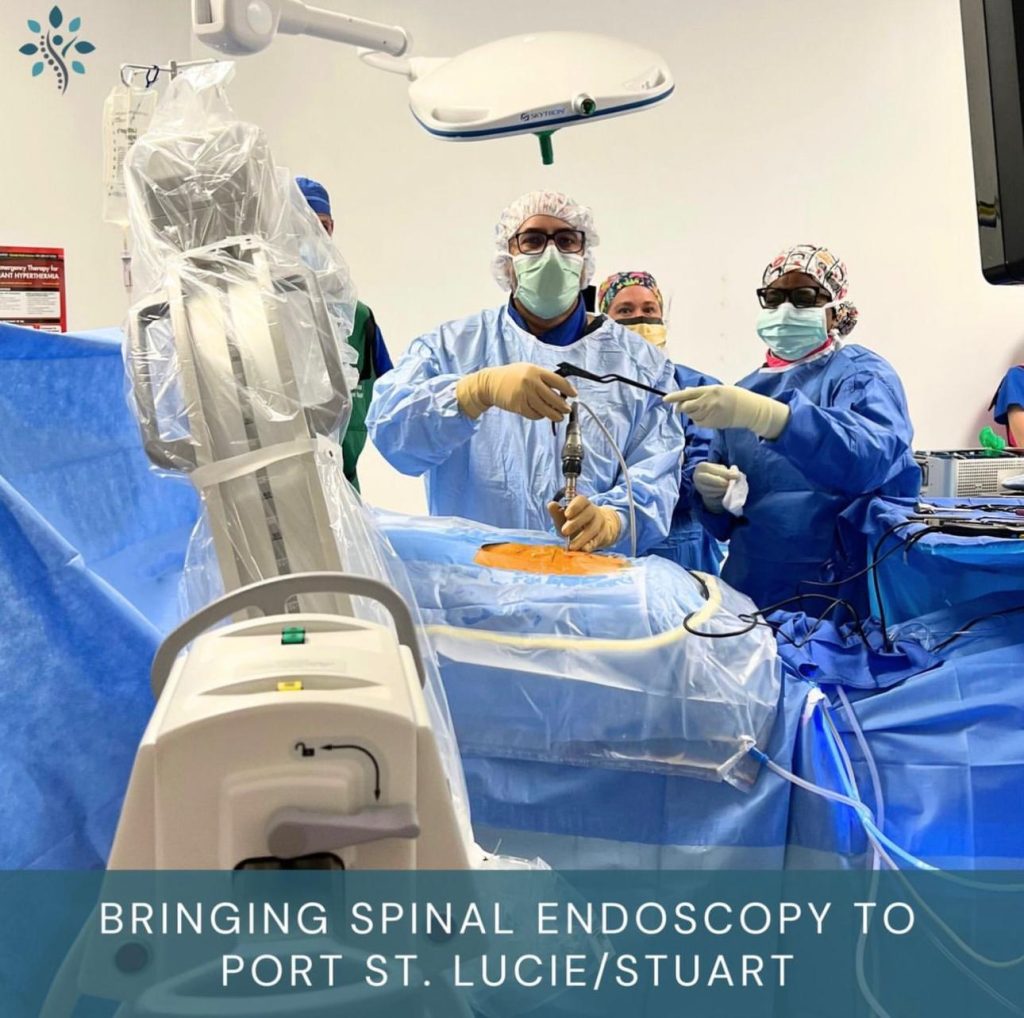
Back or neck pain caused by a herniated disc, spinal stenosis, or nerve compression can significantly affect mobility and quality of life. When conservative treatments such as physical therapy, medication, injections, and activity modification do not provide sufficient relief, surgery may become an option.
One minimally invasive approach is endoscopic spine surgery, which allows a spine surgeon to access and treat certain spinal conditions through a small incision using an endoscope and specialized surgical instruments.
Compared with traditional open surgery, an endoscopic approach is designed to minimize disruption to surrounding muscles and soft tissues. Depending on the condition and procedure, this may contribute to a smaller incision, less postoperative discomfort, and a quicker return to normal activities.
Quick Answer: How Is Endoscopic Spine Surgery Performed?
Endoscopic spine surgery is performed through a small incision using a thin camera called an endoscope and specialized surgical instruments. The surgeon guides the endoscope to the affected area of the spine, views magnified images on a monitor, and removes or treats the tissue responsible for compressing a nerve, such as part of a herniated disc, thickened ligament, or bone.
The exact technique varies according to the patient’s diagnosis, location of the spinal problem, and type of endoscopic procedure being performed.
Because endoscopic surgery uses a smaller surgical corridor than many traditional open approaches, there may be less disruption of muscles and surrounding tissues. However, not every spinal condition can or should be treated endoscopically, so a thorough evaluation by a spine specialist is essential.
What Is Endoscopic Spine Surgery?
Endoscopic spine surgery is a type of minimally invasive spine surgery that uses an endoscope—a narrow instrument containing a camera and light source—to provide a magnified view of structures inside the spine.
The surgeon accesses the treatment area through a small incision and working channel instead of creating the larger exposure often required during traditional open surgery.
Endoscopic techniques can be used for procedures such as discectomy and decompression. In a discectomy, problematic disc material may be removed, while decompression involves removing structures that are placing pressure on spinal nerves.
Endoscopic techniques continue to evolve, and some decompression and fusion procedures can now be performed using endoscopic approaches in appropriately selected patients.
Learn more: Endoscopic Spine Surgery
What Conditions Can Endoscopic Spine Surgery Treat?
Endoscopic spine surgery may be considered for selected patients with conditions that cause nerve compression, back pain, neck pain, or radiating symptoms.
Depending on the location and severity of the condition, an endoscopic procedure may be used to address:
- Herniated or bulging discs
- Lumbar spinal stenosis
- Foraminal stenosis
- Pinched or compressed spinal nerves
- Sciatica and lumbar radiculopathy
- Certain cases of cervical radiculopathy
- Bone spurs contributing to nerve compression
- Some degenerative spinal conditions
For example, endoscopic cervical foraminotomy and discectomy can be used for selected cervical spine conditions. The American Academy of Orthopaedic Surgeons notes that endoscopic techniques can offer excellent visualization while reducing access-related tissue disruption, although the procedure requires specialized surgical expertise.
The appropriate treatment depends on the underlying diagnosis—not simply the presence of back or neck pain.
How Is Endoscopic Spine Surgery Performed?
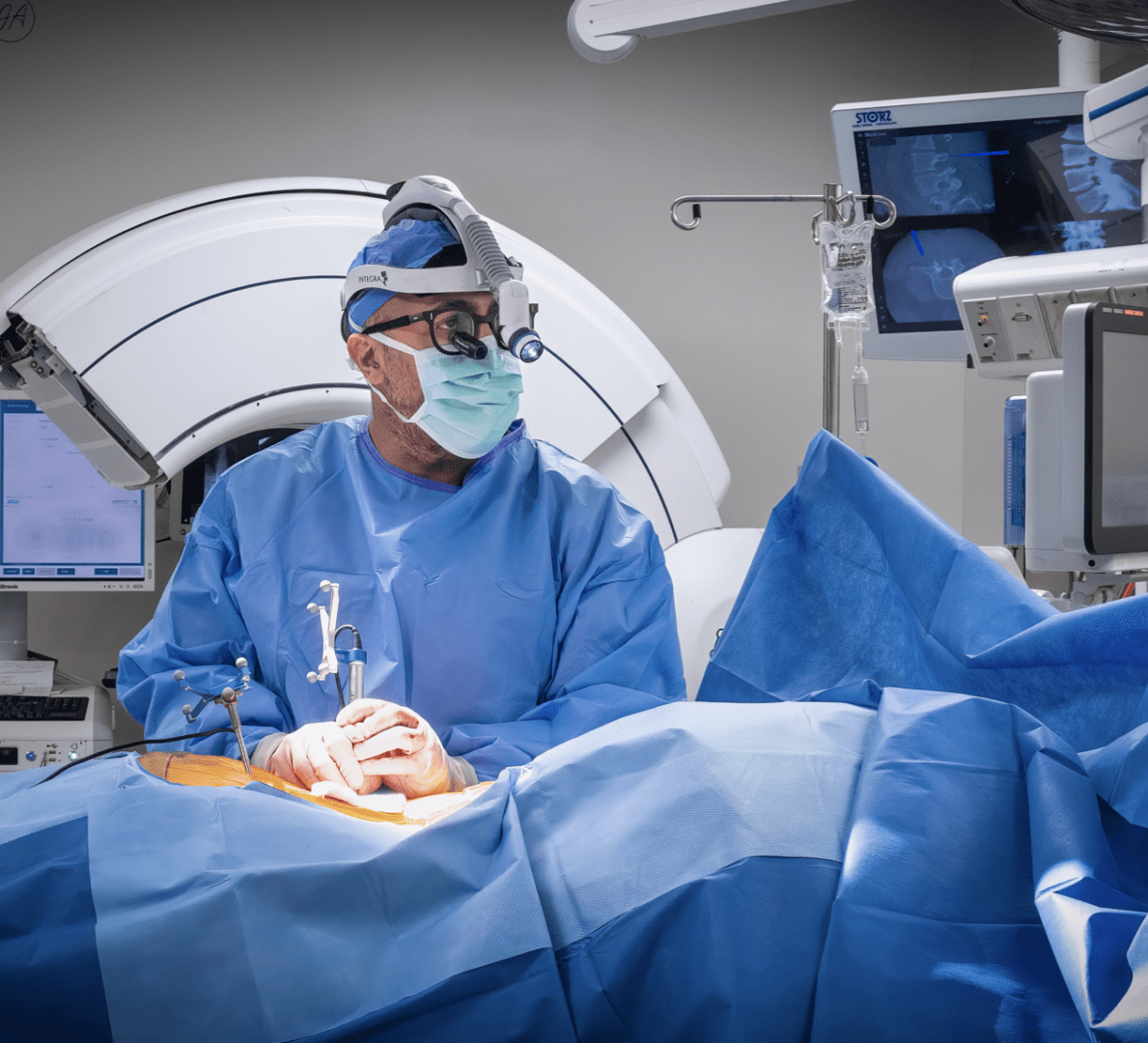
Although the precise steps differ depending on the condition and surgical approach, endoscopic spine surgery generally follows several key stages.
- Evaluation and Surgical Planning
Before recommending surgery, the spine specialist reviews the patient’s symptoms, medical history, physical examination, and diagnostic imaging.
MRI, CT scans, X-rays, or other studies may be used to identify the source and location of nerve compression and determine whether an endoscopic approach is appropriate.
The surgeon also considers whether nonsurgical treatments have been adequately attempted and whether surgery is likely to provide meaningful improvement.
- Anesthesia and Patient Positioning
On the day of surgery, the patient is positioned according to the area being treated and the specific surgical technique.
The type of anesthesia varies. Some endoscopic procedures may be performed using general anesthesia, while other techniques may use different anesthesia or sedation protocols. Patients should discuss the planned anesthesia with their surgeon and anesthesiology team before surgery.
- A Small Incision Is Made
Rather than making a large incision to expose a broad section of the spine, the surgeon makes a small incision near the targeted spinal level.
A narrow working channel is carefully advanced toward the treatment area. Imaging guidance may be used to confirm the correct location and surgical trajectory.
- The Endoscope Is Inserted
The endoscope is passed through the working channel. Its camera provides a magnified view of the surgical area on a high-definition monitor.
This visualization helps the surgeon distinguish important structures, including nerves, discs, ligaments, and bone.
- The Source of Nerve Compression Is Treated
Specialized instruments are introduced through or alongside the endoscopic working channel.
Depending on the diagnosis, the surgeon may remove a portion of herniated disc material, bone, or thickened tissue that is pressing on a nerve.
The purpose of decompression is to create more space for the affected nerve while minimizing unnecessary disruption to surrounding structures.
- Instruments Are Removed and the Incision Is Closed
Once adequate decompression or treatment has been achieved, the surgeon removes the instruments and endoscope.
Because the incision is generally small, closure may require only a few sutures or another simple wound-closure technique.
What Are the Benefits of Endoscopic Spine Surgery?
The potential advantages of endoscopic spine surgery primarily result from its minimally invasive approach.
Smaller Surgical Incision
Endoscopic surgery typically requires a relatively small incision and narrow access pathway to the spine. This reduces the amount of tissue that must be exposed during the procedure.
Less Muscle and Soft-Tissue Disruption
Traditional open surgery may require a wider exposure of muscles and surrounding tissues. Endoscopic techniques are designed to reach the targeted area while limiting disruption to these structures.
Direct, Magnified Visualization
The endoscopic camera gives the surgeon a magnified view of the treatment area. In cervical endoscopic surgery, AAOS describes the clear, magnified surgical field and reduced access-related morbidity as potential advantages that may support early postoperative recovery.
Potential for Less Postoperative Discomfort
Because less surrounding tissue may be disrupted, some patients can experience less postoperative discomfort compared with more extensive surgical approaches. However, pain levels vary significantly according to the procedure and individual patient.
Faster Functional Recovery for Some Patients
A smaller surgical corridor may allow selected patients to begin walking and resume everyday activities relatively quickly.
It is important to understand that minimally invasive does not mean risk-free or instant recovery. The speed of recovery depends on the patient’s condition, procedure, age, general health, and adherence to postoperative instructions.
Endoscopic Spine Surgery vs. Traditional Open Spine Surgery
The biggest difference between endoscopic and traditional open surgery is the way the surgeon accesses the affected spinal structure.
Endoscopic surgery uses a small working channel and camera to reach a targeted area. Traditional surgery may require a larger incision and broader exposure of spinal anatomy.
Endoscopic surgery can therefore be especially useful when the problem can be treated through a focused surgical corridor.
However, traditional open or other minimally invasive approaches remain important. Patients with extensive instability, severe deformity, multilevel disease, or other complex conditions may require a different surgical technique.
The goal should not simply be to choose the smallest incision. The goal is to select the safest and most appropriate procedure for the patient’s specific diagnosis.
What Is Recovery Like After Endoscopic Spine Surgery?
Recovery after endoscopic spine surgery varies from patient to patient. The procedure performed, severity of nerve compression, overall health, age, activity level, and other medical conditions can all influence the timeline.
AAOS emphasizes that recovery differs according to the patient’s condition, procedure, health, and activity level. Patients should follow their care team’s instructions and watch for unusual symptoms during recovery.
Immediately After Surgery
Patients are monitored as they recover from anesthesia or sedation. The medical team evaluates pain levels, movement, neurological function, and the surgical site.
Depending on the procedure and individual circumstances, some endoscopic spine procedures may be performed on an outpatient basis, while others may require additional observation.
The First Few Days
Mild soreness or discomfort around the incision may occur. Patients should carefully follow instructions regarding medications, wound care, bathing, walking, and activity.
Walking is often encouraged as appropriate because gradual movement can be an important part of postoperative recovery.
Returning to Everyday Activities
Many patients want to know, “How soon can I return to work after endoscopic spine surgery?”
There is no universal timeline.
Someone with a desk-based job may be able to resume work sooner than a person whose occupation involves heavy lifting, repetitive bending, or strenuous physical activity.
Driving, exercise, lifting, and work restrictions should always be cleared by the treating surgeon.
Longer-Term Recovery
As healing progresses, activity may gradually increase. Some patients may be prescribed physical therapy or a structured rehabilitation program to improve strength, flexibility, mobility, and body mechanics.
Recovery should be based on clinical progress rather than a predetermined deadline.
Are There Risks With Endoscopic Spine Surgery?
Yes. Although endoscopic spine surgery is minimally invasive, it is still surgery and carries potential risks.
Possible complications can include infection, bleeding, nerve irritation or injury, spinal fluid leak, persistent symptoms, recurrent disc herniation, or the possibility of needing additional treatment or surgery.
AAOS registry quality measures for spine procedures specifically track complications such as surgical-site infections, unexpected neurological deficits, and unplanned returns to the operating room.
Patients should discuss their individual risk factors and expected benefits with an experienced spine surgeon before deciding on surgery.
Who Is a Good Candidate for Endoscopic Spine Surgery?
A good candidate is generally someone with a clearly identified spinal problem that corresponds with their symptoms and can be effectively addressed using an endoscopic approach.
Surgery may be considered when symptoms continue despite appropriate conservative care or when neurological problems require surgical evaluation.
A specialist may consider factors such as:
- Location and severity of nerve compression
- MRI or CT findings
- Duration of symptoms
- Response to nonsurgical treatments
- Presence of weakness or neurological deficits
- Spinal stability and alignment
- Previous spine surgery
- General health and surgical risk
Not every patient with a herniated disc or spinal stenosis needs surgery. Similarly, not everyone who requires spine surgery is an ideal candidate for an endoscopic procedure.
When Should You Talk to a Spine Specialist?
Persistent back or neck pain that interferes with everyday life deserves a proper medical evaluation, particularly when it is accompanied by radiating pain, numbness, tingling, or weakness.
A spine specialist can determine what is causing the symptoms and whether nonsurgical treatment, endoscopic surgery, another minimally invasive procedure, or a traditional surgical approach is appropriate.
New or worsening neurological symptoms should be evaluated promptly. During postoperative recovery, AAOS advises contacting the care team for concerning symptoms such as worsening pain, signs of infection, or new numbness or weakness.
Frequently Asked Questions About Endoscopic Spine Surgery
Is endoscopic spine surgery considered minimally invasive?
Yes. Endoscopic spine surgery is a minimally invasive technique that uses a small incision, an endoscope, and specialized instruments to access and treat targeted areas of the spine.
How big is the incision for endoscopic spine surgery?
The incision is generally much smaller than the exposure used in traditional open spine surgery. The exact size varies depending on the technique, spinal level, and procedure being performed.
Are you awake during endoscopic spine surgery?
It depends on the procedure and anesthesia protocol. Some endoscopic procedures may use general anesthesia, while others may be performed with different forms of anesthesia or sedation. Your surgeon will explain which approach is appropriate for you.
How long does endoscopic spine surgery take?
Procedure time varies based on the spinal condition, number of levels treated, surgical technique, and complexity of the case. Your surgeon can provide a more accurate estimate after reviewing your imaging and treatment plan.
How soon can you walk after endoscopic spine surgery?
Some patients may be encouraged to begin walking relatively soon after surgery when medically appropriate. Individual instructions depend on the procedure and the patient’s condition.
How long is recovery after endoscopic spine surgery?
There is no single recovery timeline. Recovery depends on the procedure, underlying condition, general health, occupation, and activity level.
Is endoscopic spine surgery better than open surgery?
Neither technique is universally better. Endoscopic surgery offers important minimally invasive advantages for appropriately selected conditions, but more extensive spinal problems may require other surgical approaches.
Can a herniated disc be treated with endoscopic surgery?
Yes, selected herniated discs can be treated using endoscopic discectomy. The surgeon removes the disc material contributing to nerve compression while attempting to preserve surrounding structures.
Can spinal stenosis be treated endoscopically?
Certain types of spinal stenosis and nerve compression may be treated with endoscopic decompression. The suitability of the technique depends on the location, severity, and underlying cause of the narrowing.
Can symptoms return after endoscopic spine surgery?
They can. No spine surgery can guarantee permanent symptom relief. Recurrent disc herniation, continued degeneration, scar tissue, or another spinal condition can potentially cause symptoms later.
Take the Next Step Toward Understanding Your Spine Treatment Options
Endoscopic spine surgery offers a targeted, minimally invasive option for treating certain spinal conditions. By using a small incision, an endoscope, and specialized instruments, surgeons can address specific sources of nerve compression while limiting disruption to surrounding tissues.
However, successful treatment starts with an accurate diagnosis and appropriate patient selection. A consultation with a spine specialist can help determine whether endoscopic surgery—or another nonsurgical or surgical treatment—is best suited to your condition.
Call (954) 223-5483 to schedule a consultation and learn more about your treatment options.