
Lower back pain is one of the most common health concerns affecting adults worldwide. For many people, the pain goes beyond temporary discomfort and becomes a chronic condition that interferes with work, family life, exercise, and even sleep. In many cases, the underlying cause is a lumbar disc disorder.
The lumbar spine supports most of your body’s weight while allowing flexibility for bending, lifting, twisting, and walking. When one or more lumbar discs become damaged or begin to deteriorate, everyday movements can become painful and difficult.
Understanding lumbar disc disorders is the first step toward finding effective treatment and preventing long-term complications. Fortunately, modern diagnostic techniques and minimally invasive treatments have made it possible for many patients to return to an active, pain-free lifestyle.
What Are Lumbar Discs?
Your spine consists of 33 vertebrae separated by soft, cushion-like structures called intervertebral discs.
The lumbar spine contains five vertebrae (L1-L5), and each disc acts as a shock absorber between these bones.
Each disc has two main parts:
- Nucleus Pulposus: A soft, gel-like center that absorbs pressure.
- Annulus Fibrosus: A tough outer ring that protects the inner material.
Healthy discs allow smooth movement while protecting the spine during walking, lifting, running, and daily activities.
What Is a Lumbar Disc Disorder?
A lumbar disc disorder occurs when one or more discs become damaged due to aging, injury, repetitive stress, or degeneration.
Common lumbar disc disorders include:
- Herniated disc
- Bulging disc
- Degenerative disc disease
- Annular tear
- Disc extrusion
- Disc protrusion
- Disc height loss
These conditions can irritate nearby spinal nerves, resulting in chronic lower back pain, leg pain, numbness, weakness, or sciatica.
Common Causes of Lumbar Disc Disorders
Several factors contribute to lumbar disc damage.
- Aging
As we age, spinal discs gradually lose water content and flexibility, making them more vulnerable to cracking and tearing.
- Repetitive Physical Stress
Jobs involving heavy lifting, bending, twisting, or prolonged standing place repeated stress on lumbar discs.
Common occupations include:
- Construction workers
- Nurses
- Warehouse employees
- Mechanics
- Delivery drivers
- Poor Posture
Sitting with poor posture for long periods increases pressure on lumbar discs.
Remote work and prolonged computer use have significantly increased posture-related back problems.
- Sports Injuries
High-impact sports such as football, weightlifting, gymnastics, and wrestling increase the risk of disc injuries.
- Obesity
Extra body weight increases spinal loading, accelerating disc degeneration.
- Smoking
Smoking reduces blood flow to spinal tissues, slowing disc repair and increasing degeneration.
Symptoms of Lumbar Disc Disorders
Symptoms vary depending on the location and severity of the damaged disc.
Common symptoms include:
- Persistent lower back pain
- Pain while sitting
- Pain after standing for long periods
- Pain when bending or twisting
- Sciatica
- Burning pain down one leg
- Tingling sensations
- Numbness in the feet
- Muscle weakness
- Difficulty walking
- Reduced flexibility
Symptoms may worsen after coughing, sneezing, or lifting heavy objects.
How Lumbar Disc Disorders Affect Daily Life
Many people underestimate how much spinal pain impacts overall quality of life.
Difficulty Working
Office workers struggle with prolonged sitting.
Manual laborers often find lifting impossible.
Many patients eventually require modified duties or time away from work.
Reduced Physical Activity
Patients often stop participating in:
- Walking
- Running
- Golf
- Tennis
- Gym workouts
- Gardening
Reduced activity leads to muscle weakness, weight gain, and worsening symptoms.
Interrupted Sleep
Finding a comfortable sleeping position becomes difficult.
Frequent nighttime pain contributes to:
- Fatigue
- Irritability
- Reduced concentration
Emotional Well-Being
Chronic pain increases the risk of:
- Anxiety
- Depression
- Stress
- Social isolation
Treating lumbar disc disorders often improves both physical and emotional health.
Family Life
Simple daily activities become challenging, including:
- Playing with children
- Household chores
- Driving
- Grocery shopping
- Traveling
Many patients begin avoiding activities they once enjoyed.
Herniated Disc vs. Bulging Disc
Although these terms are often used interchangeably, they are different conditions.
Bulging Disc
The disc extends beyond its normal boundary but remains intact.
It may or may not compress nearby nerves.
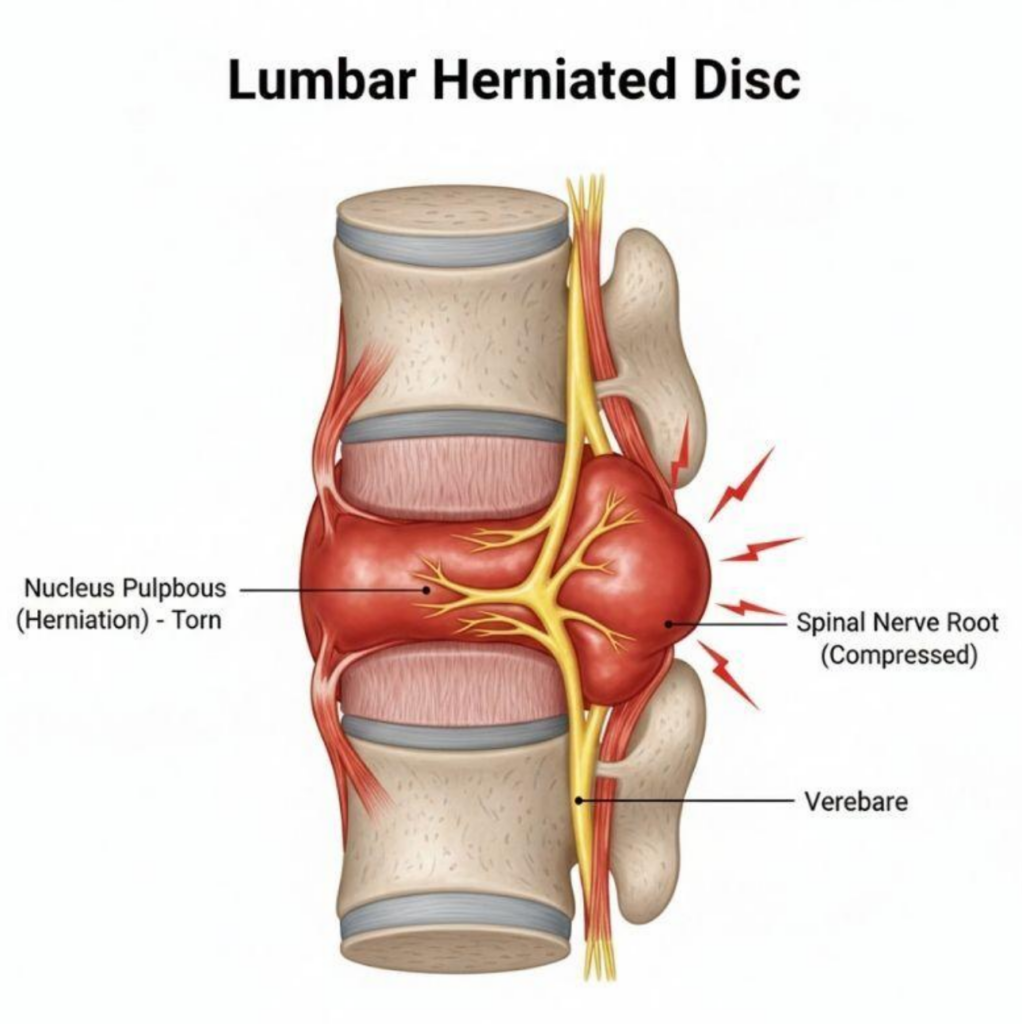
Herniated Disc
The outer layer tears, allowing the inner gel-like material to protrude outward.
Herniated discs are more likely to cause nerve compression and sciatica.
When Should You See a Spine Specialist?
Seek medical evaluation if you experience:
- Pain lasting longer than six weeks
- Progressive leg weakness
- Persistent numbness
- Difficulty walking
- Severe sciatica
- Pain that interferes with sleep
- Loss of bladder or bowel control (medical emergency)
Early diagnosis often prevents worsening symptoms.
How Lumbar Disc Disorders Are Diagnosed
A spine specialist typically performs:
Medical History
Discussion of:
- Symptoms
- Pain location
- Previous injuries
- Daily activities
Physical Examination
The physician evaluates:
- Muscle strength
- Reflexes
- Walking pattern
- Flexibility
- Range of motion
Imaging Tests
Diagnostic imaging may include:
- X-rays
- MRI
- CT scans
MRI remains the gold standard for identifying lumbar disc damage.
Treatment Options
Fortunately, many lumbar disc disorders improve without major surgery.
Conservative Treatment
Initial treatment may include:
- Physical therapy
- Anti-inflammatory medications
- Activity modification
- Core strengthening exercises
- Heat and ice therapy
Epidural Steroid Injections
These injections reduce inflammation around irritated spinal nerves.
Many patients experience temporary or long-term relief.
Regenerative Therapies
Some patients benefit from advanced regenerative medicine treatments designed to reduce pain and promote healing.
Minimally Invasive Spine Surgery
If conservative care fails, minimally invasive procedures may be recommended.
Benefits include:
- Smaller incisions
- Less tissue damage
- Faster recovery
- Reduced blood loss
- Less postoperative pain
- Earlier return to daily activities
Modern minimally invasive techniques can effectively treat many lumbar disc conditions while preserving healthy surrounding tissues.
Can Lumbar Disc Disorders Be Prevented?
Although aging cannot be prevented, several lifestyle habits help protect spinal health.
Maintain Good Posture
Keep your spine aligned while sitting and standing.
Exercise Regularly
Strengthening your core muscles provides better spinal support.
Good exercises include:
- Walking
- Swimming
- Pilates
- Yoga
- Physical therapy exercises
Lift Properly
Always bend your knees rather than your back.
Maintain a Healthy Weight
Reducing excess weight decreases pressure on lumbar discs.
Stop Smoking
Improved circulation supports healthier spinal tissues.
Stretch Daily
Gentle stretching improves flexibility and reduces muscle tension.
Living Well with Lumbar Disc Disorders
Receiving a lumbar disc diagnosis does not necessarily mean surgery is inevitable.
Many patients successfully manage symptoms through personalized treatment plans, exercise, posture improvements, and minimally invasive procedures when appropriate.
The key is seeking early evaluation before nerve damage progresses.
If lower back pain has started interfering with your work, sleep, hobbies, or family life, consulting a spine specialist can help you identify the cause and explore the most effective treatment options.
Early intervention often leads to faster recovery, reduced pain, and a better quality of life.
Frequently Asked Questions (FAQ)
What is the most common lumbar disc disorder?
A herniated lumbar disc is one of the most common conditions causing lower back pain and sciatica.
Can lumbar disc disorders heal without surgery?
Yes. Many patients improve with physical therapy, medications, lifestyle modifications, and minimally invasive treatments without requiring surgery.
What are the warning signs of a herniated lumbar disc?
Common symptoms include lower back pain, leg pain, numbness, tingling, muscle weakness, and sciatica.
Is walking good for lumbar disc problems?
In many cases, walking is an excellent low-impact exercise that improves circulation and supports spinal health. Always follow your physician’s recommendations.
How long does recovery take?
Recovery varies depending on the severity of the condition and treatment approach. Conservative treatment may take several weeks, while minimally invasive procedures often allow patients to recover more quickly than traditional surgery.
Can poor posture cause lumbar disc problems?
Yes. Poor posture places excessive stress on spinal discs and can accelerate degeneration over time.
When should I seek emergency care for back pain?
Seek immediate medical attention if you experience sudden loss of bladder or bowel control, severe leg weakness, or numbness in the groin area, as these may indicate a serious spinal condition requiring urgent treatment.
Find Relief from Chronic Back Pain with Elite Spine Health & Wellness
If persistent lower back pain is affecting your work, sleep, or daily routine, don’t wait for it to get worse. The experienced team at Elite Spine Health & Wellness provides comprehensive evaluations and personalized treatment plans for lumbar disc disorders, sciatica, degenerative disc disease, and other spine conditions. Using advanced diagnostic tools and minimally invasive treatment options, we focus on helping patients regain mobility, reduce pain, and return to the activities they enjoy.
📞 Call Elite Spine Health & Wellness today at (954) 223-5483 to schedule your consultation and take the first step toward lasting spine health.